Efficient Sunflower Oil Filter Machines: Ensuring Quality for Global Markets
29 12,2025
Product description
Sunflower oil filter machines are essential in refining crude oil by removing impurities, solids, and residues to produce clear, pure finished oil that meets international standards for cooking, cosmetics, and industrial use. This article explores four key filtration technologies—plate-and-frame filters, vacuum filter units, centrifugal oil separators, and pressure leaf filters—comparing their applications, efficiency (ranging from 50–500 L/h per unit), and scalability. It also outlines capacity tiers (small, medium, large) tailored to enterprise size, emphasizes food-grade stainless steel construction and automation options for safety and throughput, and explains how smart selection boosts product consistency and global market compliance. Ideal for manufacturers aiming to elevate quality control from raw material to final export-ready product.
Why Choosing the Right Sunflower Oil Filter Machine Matters for Global Export Success
In sunflower oil production, even trace impurities can compromise shelf life, taste, and compliance with international food safety standards like ISO 22000 or HACCP. That’s where a high-performance oil filtration system becomes not just an option—it’s a non-negotiable step toward premium quality and market trust.
Four Key Technologies—Which One Fits Your Operation?
Modern sunflower oil filtering relies on four proven technologies, each suited to different production scales and output goals:
- Plate & Frame Press Filters: Ideal for small to mid-scale producers (5–50 L/h). Efficient at removing solid particles down to 10 µm. Commonly used in artisanal cold-pressed oil facilities.
- Vacuum Filter Systems: For medium to large plants (50–200 L/h). Removes moisture, phospholipids, and fine sediments under vacuum pressure. Offers up to 98% clarity improvement post-filtration.
- Centrifugal Separators: High-speed separation (up to 4,000 RPM) ideal for continuous industrial lines (200–1,000 L/h). Excellent for removing water, gums, and metal residues without chemical additives.
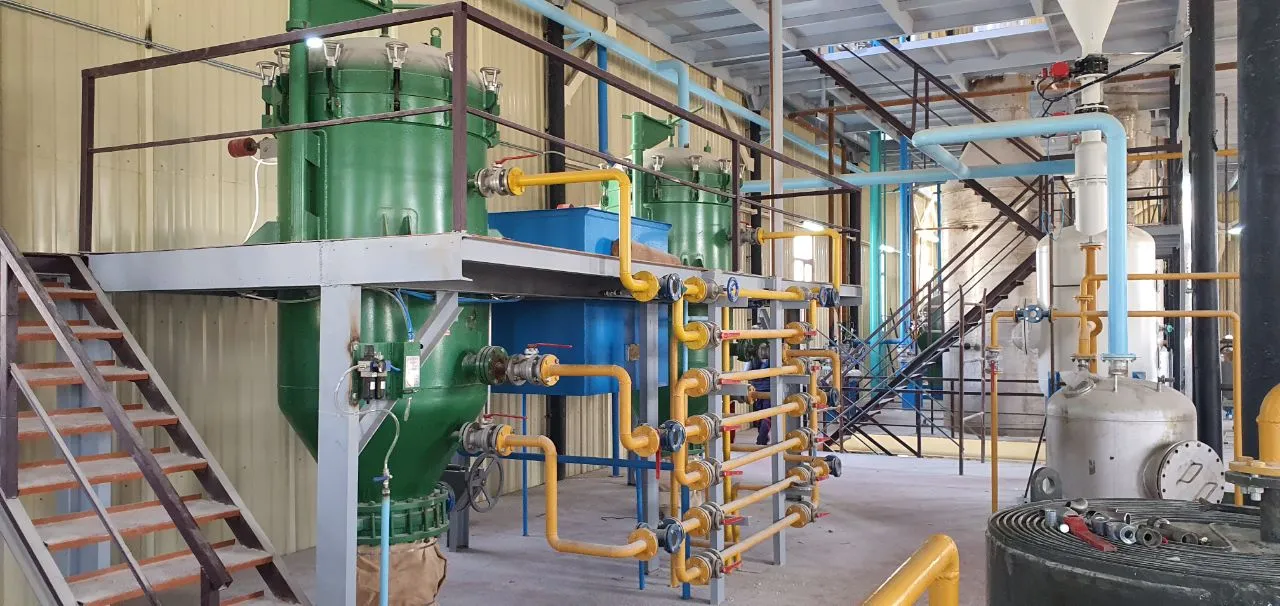
- Pressure Leaf Filters: Best for batch processing in food-grade environments (100–500 L/h). Combines speed with precision; widely adopted by EU-certified manufacturers.
For example, a Ukrainian exporter using a centrifugal filter reported a 30% reduction in oil degradation during storage—critical for meeting UAE and Saudi Arabia’s strict import requirements.
Scale Matters: Matching Capacity to Business Growth
Choosing the right capacity isn’t just about current needs—it’s about future scalability. A 50 L/h unit may suffice today, but if you’re targeting B2B buyers in Germany or Japan, upgrading early ensures consistent supply chain performance. Many successful exporters start with modular systems that allow expansion from 50 to 500 L/h within two years.
Material Safety & Automation: The Hidden Competitive Edge
Food-grade stainless steel (SS304/SS316) is no longer optional—it’s mandatory for exports to Europe and North America. These materials resist corrosion, prevent contamination, and meet FDA and EC 1935/2004 regulations. Pair this with automated control panels (e.g., PLC-based), and you reduce labor costs by up to 40% while increasing consistency—key for repeat orders from global buyers.
Pro Tip: Use our free Sunflower Oil Filter Selection Quiz to match your production volume, budget, and export target markets. It takes 2 minutes—and could save you thousands in wrong equipment choices.
From raw seed to bottled product, every stage matters. With the right filtration solution, you’re not just cleaning oil—you’re building brand credibility, reducing waste, and positioning yourself as a reliable supplier in competitive markets like the Middle East, Southeast Asia, and Latin America.