Sunflower Oil Export Market Trends: Health-Focused Diets Drive Global Demand Growth
15 02,2026
Market analysis
This article analyzes the evolving global sunflower oil export market, highlighting how health-focused dietary trends are accelerating demand across key import regions. Drawing on authoritative industry sources and trade statistics, it examines market size dynamics, consumption drivers, and shifting buyer preferences toward high-quality, consistently supplied edible oils. The study also connects market opportunity with production realities by outlining core sunflower oil processing steps and comparing capacity advantages across different equipment scales, helping exporters assess throughput, efficiency, and quality control implications. In addition, it evaluates competitive forces and emerging industry trends, then proposes diversified go-to-market approaches—with a strong emphasis on website-led marketing and digital channel building—to strengthen brand visibility and lead generation. Overall, the analysis supports businesses seeking to capitalize on global healthy-eating momentum, improve production efficiency, and enhance sunflower oil brand competitiveness in export markets.

Key Takeaway
As global consumers shift toward healthier fats, sunflower oil is gaining share across food manufacturing, retail, and foodservice. Exporters that combine consistent quality with efficient production capacity—and communicate it clearly through high-performing websites—are best positioned to win long-term contracts.
Sunflower Oil Export Market: Demand Growth Fueled by Global Healthy Eating
The sunflower oil export market is entering a new cycle of opportunity. While price volatility and supply disruptions have periodically reshaped trade flows, the underlying driver is increasingly structural: consumers, regulators, and food brands are pushing for “better-for-you” oils with cleaner labels and favorable fatty-acid profiles. In this landscape, sunflower oil stands out as a practical, scalable choice—especially for buyers looking for a reliable alternative to oils perceived as heavier, more processed, or more controversial.
According to FAO and USDA Oilseeds market reporting, global vegetable oil demand continues to rise with population growth, urbanization, and packaged-food penetration. In many importing regions, sunflower oil is outperforming category growth due to its familiarity, neutral taste, and increasing availability of high-oleic grades for premium and industrial applications.

1) Global Market Snapshot: Scale, Trade Patterns, and Where Growth Concentrates
In 2024, the global edible oils market remained highly competitive, yet sunflower oil retained its strategic role as a “bridge oil”—used both in household cooking and as an ingredient across snacks, bakery, ready meals, sauces, and frying. Industry tracking from sources such as Statista and public filings from major FMCG brands indicates sustained growth of the healthy cooking oil segment, with sunflower oil frequently listed among top-considered options.
From a trade perspective, exports are shaped by a few key supply hubs and a long tail of importers. Market attention often focuses on the Black Sea region and the EU, but demand expansion is increasingly visible in MENA, Sub-Saharan Africa, and parts of South & Southeast Asia where urban consumers are upgrading from loose oils to packaged, branded options.
Data Panel (Reference Ranges)
Healthy cooking oil demand:
Often reported at ~4%–7% CAGR in key consumer markets (segment-dependent).
High-oleic sunflower oil adoption:
Growing in snacks & frying for stability and labeling preferences.
Note: Figures represent typical ranges cited in public industry summaries and category reports; exact values vary by country and channel.
2) Why “Healthy Eating” Is Converting Into Real Purchase Orders
The health narrative is no longer just consumer marketing—it has become a procurement criterion. Many buyers now evaluate oils on a mix of nutrition perception, functional performance, and label friendliness. Sunflower oil benefits from:
- Favorable fatty-acid positioning (especially high-oleic variants in premium and industrial use).
- Neutral taste and aroma, making it versatile across cuisines and processed foods.
- Broad acceptance in retail and foodservice, reducing consumer education costs.
- Compatibility with “cleaner label” trends when paired with controlled refining and transparent specs.
For exporters, the commercial implication is clear: buyers are willing to negotiate beyond spot pricing when a supplier can prove consistent specs, stable lead times, and documented quality systems. In other words, “health” is the entry ticket; execution wins the contract.

3) Production Process & Equipment: Efficiency as a Competitive Advantage
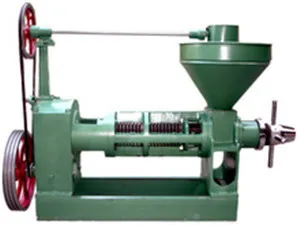
Export growth is not only about selling more—it’s about delivering at scale with repeatable quality. Sunflower oil buyers (especially distributors and food manufacturers) increasingly request operational proof points: production flow, capacity range, yield stability, and contamination control. A typical industrial workflow includes cleaning, conditioning, pressing/extraction, filtration, and optional refining stages depending on target grade and market requirements.
Capacity Logic Buyers Understand
Different customer types match to different production scales. Presenting capacity in an intuitive way can improve inquiry-to-quotation conversion.
| Line Type |
Typical Daily Throughput (Reference) |
Best-Fit Buyers |
Core Value Message |
| Compact / Entry line |
~5–20 tons/day |
Regional packers, trial importers |
Low risk, fast deployment, quick ROI story |
| Mid-scale industrial |
~30–100 tons/day |
Importers, distributors, FMCG partners |
Stable supply, consistent specs, scalable SKUs |
| Large integrated plant |
~150–500+ tons/day |
Food manufacturers, national tenders |
Contract reliability, quality systems, long-term pricing logic |
Reference throughput ranges vary by seed quality, process route (pressing vs extraction), and refining requirements.
The marketing implication is often overlooked: when a supplier communicates production capability with clarity—yield stability, quality checkpoints, and traceability—buyers feel safer moving from trial orders to annual contracts. This is how “production efficiency” turns into a brand advantage, not just an internal KPI.
4) High-Potential Import Markets: What Buyers Actually Need
Demand signals differ sharply by region. Exporters that tailor their offer—spec sheets, pack formats, and compliance documentation—typically shorten negotiation cycles and reduce rework.
Middle East & North Africa (MENA)
Strong preference for reliable supply and stable specifications. Private-label retail and foodservice can drive volume. Clear labeling, shelf-life documentation, and consistent packaging performance are often decisive.
Sub-Saharan Africa
Growth is linked to packaged food expansion and urban retail. Buyers value competitive landed cost, flexible packing, and dependable lead times—plus supplier support on product positioning for modern trade.
EU & UK
Compliance depth matters: traceability, residue controls, and documentation discipline. High-oleic grades and sustainability narratives (where applicable) can open premium lanes.
South & Southeast Asia
Fast-moving demand with strong competition. Success often comes from differentiated positioning (e.g., high-oleic for frying stability) and strong distributor enablement: marketing materials, claims compliance, and predictable replenishment.

5) Competitive Landscape: Where the Next Differentiation Will Come From
Competition is tightening in three directions at once: large origin suppliers pushing scale, regional bottlers strengthening distribution, and agile private-label players moving quickly across marketplaces. As a result, “good quality” is assumed. The next layer of differentiation typically comes from:
- Specification transparency: moisture & impurity control, peroxide value targets, free fatty acid ranges, and sensory consistency.
- Industrial reliability: shipment discipline, batch consistency, and complaint-response speed.
- Portfolio structure: refined vs cold-pressed, standard vs high-oleic, multiple pack sizes for retail and foodservice.
- Brand credibility: documentation, factory capability proof, and trust-building content.
This is where the marketing line becomes operationally meaningful: “Seize the global healthy eating trend and elevate sunflower oil brand competitiveness” is persuasive only when backed by verifiable production capability—efficient lines, stable capacity, and a quality system that buyers can audit mentally even before they request a sample.
6) Multi-Channel Export Marketing—Why Website Marketing Now Carries the Deal
B2B buyers do not “discover” suppliers the way they did five years ago. They shortlist through a blended journey: marketplace research, Google searches, LinkedIn checks, and peer references. In that journey, an exporter’s website is increasingly the trust engine—the place where procurement teams verify whether the supplier is real, capable, and responsive.
A Practical Channel Mix That Converts
- Website SEO + product landing pages: target intent keywords like “sunflower oil exporter,” “refined sunflower oil bulk,” “high oleic sunflower oil supplier,” “sunflower oil private label,” and “sunflower oil for frying.”
- B2B marketplaces (selective): use them for lead volume, but route qualified buyers to your website for deeper proof (specs, compliance, capacity, packaging).
- LinkedIn & email enablement: publish short technical posts (quality metrics, shipment readiness, application notes) and nurture RFQs with clear documentation.
- Distributor co-marketing: provide localized sell sheets and claim-compliant product narratives aligned with healthy-eating positioning.
A high-performing sunflower oil export website typically answers buyer questions before they are asked: available grades, quality indicators, packaging options, loading plans, documentation sets, and lead time logic. When those elements are structured properly, the website becomes a silent salesperson—reducing low-quality inquiries while increasing serious RFQs.
CTA: Turn “Healthy Oil Demand” Into Repeat Export Orders
If your goal is to seize the global healthy eating trend and elevate sunflower oil brand competitiveness, the fastest path is a clear, buyer-ready offer: stable specs, efficient production capacity, and documentation that builds trust instantly.
Request a Sunflower Oil Export Specification & Capacity Brief
Ideal for importers, distributors, food manufacturers, and private-label buyers evaluating long-term supply.












.jpg?x-oss-process=image/resize,h_1000,m_lfit/format,webp)