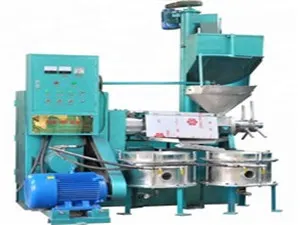
Selecting the right shea butter refinery equipment requires more than choosing individual machines. The equipment configuration depends on crude shea butter quality, required refining capacity, finished product specifications, and whether the plant uses physical or chemical refining. A typical shea butter refining plant includes melting and filtration equipment, bleaching vessels, filtration systems, vacuum deodorization equipment, cooling systems, storage tanks, and supporting utilities. Degumming and alkali neutralization are added when raw material analysis and refining requirements justify them. For project planning, equipment capacity must also be matched across each processing stage to prevent bottlenecks. This guide explains the main equipment requirements, refining configurations, capacity calculations, and technical information needed to develop a suitable refinery project.
1. What Equipment Is Required for a Shea Butter Refinery?
A shea butter refinery usually consists of feed preparation, pretreatment, bleaching, deodorization, cooling, and storage sections. Not every project requires the same equipment. The final list should be based on crude butter analysis and target product quality.
| Equipment | Main function | Selection requirement |
|---|---|---|
| Heated crude butter tank | Melts and holds crude shea butter for processing | Select according to feed condition and batch or continuous operation |
| Heating and temperature control system | Maintains butter in a pumpable condition | Match heating capacity to tank volume and transfer requirements |
| Crude butter filter | Removes insoluble particles | Select according to impurity loading and filtration throughput |
| Degumming system | Removes gums and phospholipid-related impurities | Include when raw material analysis and process trials require it |
| Alkali neutralization system | Reduces free fatty acids through chemical treatment | Required for chemical or partial neutralization |
| Centrifugal separator | Separates soapstock, gums, or aqueous phases | Match to the selected treatment process |
| Vacuum bleaching vessel | Provides controlled conditions for adsorptive bleaching | Size according to batch volume or continuous throughput |
| Bleaching earth dosing system | Adds bleaching adsorbent | Match dosing accuracy to the process and feed rate |
| Leaf filter or pressure filtration system | Removes spent bleaching earth | Size according to slurry loading and filtration cycle |
| Vacuum deodorizer | Removes undesirable volatile compounds and residual free fatty acids | Select according to required product quality and operating capacity |
| Vacuum and steam systems | Support deodorization and process conditions | Design as part of the complete refining system |
| Heat exchangers and cooling system | Control heating and cooling during processing | Match heat duty and process flow |
| Refined butter storage tanks | Hold finished shea butter | Consider temperature maintenance and product handling |
| Pumps, pipelines, valves, and instruments | Transfer material and control the process | Match to butter viscosity, temperature, and plant layout |
The distinction between essential and optional equipment is important when requesting a quotation. A proposal that includes every possible refining unit may increase project complexity and investment without improving the finished product.
For example, a plant processing relatively clean crude shea butter may not need a full chemical neutralization section. Another plant receiving crude butter with higher free fatty acid levels may require additional treatment and separation equipment.

2. How Is Shea Butter Refinery Equipment Configured?
The shea butter refinery equipment configuration is mainly determined by the selected refining route.
Physical Refining Configuration
A typical physical refining process is:
Crude shea butter melting → crude filtration → optional degumming → bleaching → bleaching earth filtration → vacuum deodorization → cooling → refined butter storage.
The main equipment includes:
- Heated crude butter storage and transfer tanks
- Crude filtration unit
- Optional degumming reactor and separation system
- Vacuum bleaching vessel
- Adsorbent dosing equipment
- Leaf filter or equivalent filtration system
- Vacuum deodorizer
- Steam stripping and vacuum systems
- Condenser and heat recovery equipment
- Cooling heat exchanger
- Finished product storage tanks
Physical refining removes free fatty acids mainly through high-vacuum steam deodorization. Its suitability depends on crude butter quality and the ability of pretreatment to control impurities.
A study by Ruiz Méndez and colleagues, published in Grasas y Aceites in 1991, investigated physical refining of shea butter. The researchers reported that good-quality bleached and deodorized butter could be obtained when the initial free fatty acid level was below 5% under their tested conditions. For higher initial acidity, they recommended partial neutralization to reduce losses of unsaponifiable matter. These findings provide useful technical guidance, but they should not be treated as universal design limits for every raw material or product specification.
Chemical Refining Configuration
A typical chemical refining process is:
Crude shea butter melting → filtration → degumming, when required → alkali neutralization → separation → washing and drying, when required → bleaching → filtration → deodorization → cooling → storage.
Additional equipment may include:
- Alkali preparation and dosing tanks
- Neutralization reactor
- Centrifugal separator
- Washing system
- Drying equipment
- Soapstock collection and handling system
Chemical refining introduces additional chemical treatment and separation stages. Equipment sizing must account for the amount of free fatty acids, chemical consumption, soapstock formation, and washing requirements.
How Should the Two Configurations Be Compared?
| Selection factor | Physical refining | Chemical refining |
|---|---|---|
| Main FFA removal stage | Vacuum deodorization | Alkali neutralization |
| Alkali dosing system | Not normally required | Required |
| Soapstock separation | Not normally required | Required |
| Pretreatment | Important for controlling impurities | Depends on feed quality and process |
| Waste handling | Depends on pretreatment and filtration | Includes soapstock and potentially washing wastewater |
| Refining losses | Influenced by FFA removal and deodorization severity | Includes neutral oil losses associated with soapstock |
| Equipment configuration | Fewer chemical treatment units | Additional reaction and separation units |
The choice should be made after testing crude shea butter and defining the required refined product. For buyers, comparing the two routes on refining loss, finished quality, operating requirements, and equipment investment is more useful than selecting a process based on equipment price alone.

3. How Should Shea Butter Refinery Capacity Be Matched to Equipment?
A refinery's nominal capacity should be calculated from crude shea butter feed rate and effective operating time. Each processing section must be capable of handling the required throughput.
Continuous Refining Capacity
For a continuous shea butter refining plant:
Hourly feed rate = Daily crude butter throughput ÷ Effective operating hours per day
For example, a plant designed to process 10 tonnes of crude shea butter during 20 operating hours requires an average feed rate of:
10 ÷ 20 = 0.5 tonnes per hour
This is the crude feed rate, not the finished refined butter output. Actual product recovery depends on refining losses, removed impurities, and the selected process.
The bleaching vessel, filtration system, deodorizer, pumps, and supporting utilities must all be matched to the required throughput.
Batch Refining Capacity
For batch refining, equipment capacity depends on batch volume and the complete processing cycle.
Required batches per day = Daily crude butter throughput ÷ Crude butter feed per batch
The batch cycle should include heating, dosing, mixing, treatment time, separation, filtration, discharge, and preparation for the next batch.
A larger bleaching vessel does not necessarily increase total plant output. If the filtration system requires longer processing time or the deodorizer has insufficient capacity, the entire production line may be limited by those sections.
Equipment Capacity Matching Checklist
Before selecting equipment, confirm:
- Required daily crude shea butter processing capacity
- Effective operating hours per day
- Batch or continuous production preference
- Batch size or hourly feed rate
- Filtration cycle and adsorbent loading
- Deodorizer throughput and operating cycle
- Heating and cooling requirements
- Steam, electricity, water, and vacuum availability
- Finished product storage requirements
A supplier should provide the capacity of each main processing unit rather than quoting only one overall plant capacity. This makes it easier to identify bottlenecks and compare different equipment proposals.

4. How Does Raw Material Quality Affect Equipment Selection?
Crude shea butter quality directly affects the refining process. Equipment should be selected using laboratory analysis rather than assumptions about raw material consistency.
The following parameters should be checked before finalizing the equipment configuration:
| Raw material parameter | Why it matters for equipment selection |
|---|---|
| Free fatty acid content | Helps determine whether physical refining or neutralization is suitable |
| Moisture content | Influences pretreatment, drying, and vacuum operation |
| Insoluble impurities | Determines crude filtration requirements |
| Peroxide value | Helps evaluate oxidation condition and product-quality requirements |
| Phospholipid and gum content | Helps determine whether degumming is necessary |
| Color | Influences bleaching requirements |
| Odor | Affects deodorization requirements |
| Unsaponifiable matter | Important when product value depends on retaining minor components |
The Codex Regional Standard for Unrefined Shea Butter, CXS 325R-2017, provides reference quality criteria for unrefined shea butter in its scope. Its Grade I criteria include maximum water content of 0.05%, free fatty acids of 1%, peroxide value of 10 meq/kg, and insoluble impurities of 0.09%. The Grade II ranges include water content from 0.06% to 0.2%, free fatty acids from 1.1% to 3%, peroxide value from 11 to 15 meq/kg, and insoluble impurities from 0.1% to 0.2%. These are criteria for unrefined shea butter under that regional standard, not universal specifications for all refinery feedstock or finished products.
Shea butter also has a notable unsaponifiable fraction. A 2026 review in the Journal of the American Oil Chemists' Society discusses its tocopherols, sterols, and triterpenes, as well as the processing challenges associated with these components. This makes refining severity an important design consideration when the buyer wants to retain specific minor components.
Define Finished Product Specifications Before Purchasing Equipment
The buyer should specify the required:
- Color and appearance
- Acid value or free fatty acid level
- Odor and flavor
- Moisture and volatile matter
- Insoluble impurities
- Peroxide value, where applicable
- Unsaponifiable matter, if relevant to the intended application
For reference, an AAK technical dossier submitted in its 2019 FDA GRAS notice listed specifications for one refined shea butter product, including an acid value maximum of 0.5 mg KOH/g, peroxide value maximum of 10 meq/kg, volatile matter maximum of 0.2%, and insoluble impurities maximum of 0.05%. These values describe that documented product specification and should not automatically be applied to every shea butter project.
5. What Information Is Needed to Design a Shea Butter Refinery Project?
A reliable shea butter refining plant equipment proposal starts with project data. Buyers should provide the following information so the equipment configuration can be matched to actual production requirements.
| Project information | Details to provide | Engineering purpose |
|---|---|---|
| Raw material | Crude shea butter, including available laboratory analysis | Determines refining route and pretreatment |
| Processing capacity | Required tonnes per day | Establishes equipment throughput |
| Operating schedule | Hours per day and working days | Supports batch or continuous sizing |
| Initial FFA | Laboratory test result | Helps assess neutralization and deodorization requirements |
| Moisture and impurities | Laboratory test results | Determines filtration and drying requirements |
| Finished product | Food-grade, cosmetic-grade, or other specified application | Defines product-quality requirements |
| Target product specifications | Acidity, color, odor, moisture, and other limits | Determines refining depth |
| Production mode | Batch or continuous | Determines equipment arrangement |
| Utilities | Steam, electricity, cooling water, and available fuel | Supports utility-system design |
| Project location | Country and installation conditions | Supports layout, utilities, and engineering planning |
| Project scope | Main equipment only or complete processing system | Defines supply and installation boundaries |
The most important starting information is crude shea butter quality and required daily capacity. Without these two inputs, an equipment quotation may be based on assumptions that later need to be revised.
What Should a Technical Equipment Proposal Include?
A complete proposal should identify:
- Recommended refining route and process flow.
- Main equipment list, including optional treatment units.
- Design capacity of each processing section.
- Equipment materials and main technical specifications.
- Heating, cooling, steam, vacuum, and electrical requirements.
- Expected process losses and product recovery assumptions.
- Automation and process-control scope.
- Installation, commissioning, and operator-training responsibilities.
- Product-quality targets and performance acceptance criteria.
This information allows buyers to compare equipment suppliers on engineering scope and process suitability, instead of comparing quotations only by the number of machines or headline price.
6. How to Evaluate a Shea Butter Refinery Equipment Supplier
When comparing a shea butter refinery equipment supplier, buyers should assess whether the supplier can design an integrated system rather than simply provide individual machines.
Use the following checklist:
| Evaluation point | Questions to ask the supplier |
|---|---|
| Process design | Can the supplier explain why the proposed refining route is suitable for the crude butter? |
| Equipment configuration | Are required and optional units clearly distinguished? |
| Capacity calculation | Is the capacity of each processing section specified? |
| Raw material analysis | Has the design considered the buyer's actual laboratory results? |
| Product quality | Are finished product specifications defined in the proposal? |
| Refining losses | Are the main loss factors and assumptions explained? |
| Filtration system | Is filter capacity matched to bleaching earth loading and filtration time? |
| Deodorization system | Are vacuum, steam, heating, and condensation included? |
| Automation | Are temperature, pressure, dosing, and process sequences controlled? |
| Utility design | Are utility consumption and connection requirements documented? |
| Project delivery | Are installation, commissioning, and training responsibilities clear? |
| Technical acceptance | Are capacity and product-quality acceptance criteria specified? |
For a complete project, also confirm whether the supplier's scope includes engineering design, equipment manufacturing, pipelines, electrical systems, control systems, installation, commissioning, and operator training.
7. Common Mistakes When Purchasing Shea Butter Refinery Equipment
Selecting Equipment Before Testing Crude Butter
Different feedstocks can have different FFA, moisture, and impurity levels. A standard equipment list may not be suitable for every plant.
Recommendation: Obtain representative laboratory results before deciding the refining route and equipment configuration.
Choosing a Refining Route Only by Its Equipment Count
A process with fewer units is not automatically more economical. The required product quality, refining losses, chemical consumption, and operating requirements must also be considered.
Recommendation: Compare physical and chemical refining using the same raw material and product-quality targets.
Oversizing the Main Vessel but Undersizing Filtration
The bleaching vessel may have sufficient capacity while the filter becomes the bottleneck.
Recommendation: Calculate filtration throughput using adsorbent loading, slurry properties, filter area, and filtration cycle time.
Ignoring Temperature Control During Storage and Transfer
Shea butter has a melting range of approximately 35–40°C in the Codex reference for unrefined shea butter. Its physical condition during storage and transfer therefore needs to be considered in tank, pump, and pipeline design.
Recommendation: Evaluate heating and temperature-maintenance requirements to prevent solidification and transfer difficulties. Heating conditions should be established according to the actual feed and process.
Requesting a Quotation Without Defining Project Scope
A quotation for individual machines is not directly comparable with a quotation for a complete refinery system.
Recommendation: Define whether the project requires equipment supply only or a complete engineering and installation package. Request an itemized equipment list and clearly stated supply boundaries.
8. Frequently Asked Questions About Shea Butter Refinery Equipment
What equipment is needed for a shea butter refining plant?
A typical plant requires heated feed tanks, crude filtration equipment, bleaching vessels, adsorbent dosing equipment, filtration systems, vacuum deodorization equipment, cooling systems, storage tanks, pumps, and supporting utilities. Degumming and neutralization equipment depend on crude butter quality and the selected refining route.
Is neutralization necessary for shea butter refining?
Not in every project. Physical refining may be suitable when crude butter quality and pretreatment are appropriate. Higher initial free fatty acid levels may require partial or full alkali neutralization, depending on the target product and acceptable refining losses.
What is the difference between a batch and continuous shea butter refinery?
A batch system processes a defined quantity of butter through individual treatment cycles. A continuous system processes material at a controlled feed rate through interconnected processing sections. The selection depends on daily capacity, operating schedule, production flexibility, and investment requirements.
How is shea butter refinery capacity calculated?
For continuous refining, hourly feed rate is calculated by dividing daily crude butter throughput by effective operating hours. For batch refining, capacity depends on batch feed quantity and total cycle time. The bleaching, filtration, and deodorization sections must all be sized to support the production target.
Can a shea butter refinery be customized for different product specifications?
Yes. Equipment configuration can be adjusted according to crude butter quality, required acidity, color, odor, moisture, and other product specifications. The refining route and operating conditions should be evaluated against product quality and refining losses.
Engineering Recommendations: Preparing a Shea Butter Refinery Project
The right Shea Butter Refinery Equipment configuration should be based on three decisions:
- Raw material: What are the initial FFA, moisture, impurity, and other quality characteristics?
- Finished product: What acidity, color, odor, moisture, and other specifications must the refined butter meet?
- Production requirement: How many tonnes of crude shea butter must be processed per day, and will the plant operate in batch or continuous mode?
For a preliminary equipment configuration, buyers should prepare the following project information:
- Required capacity: ___ TPD
- Crude butter FFA: ___ %
- Moisture content: ___ %
- Insoluble impurities: ___ %
- Target product application: ___
- Required finished product specifications: ___
- Preferred operation: Batch / Continuous
- Project location: ___
With these details, the refining route, equipment list, processing capacity, and supporting utility requirements can be evaluated before the final equipment selection. This provides a clearer technical basis for developing a shea butter refining plant and requesting an engineering proposal.