Commercial peanut oil production involves more than choosing an oil press. A suitable processing line may include raw material cleaning, shelling when needed, kernel preparation, conditioning, oil extraction and crude oil clarification. The right configuration depends on whether the plant processes in-shell peanuts or shelled kernels, the required throughput and the selected extraction method.
Mechanical screw pressing is a common choice for small and medium-sized commercial operations. Larger plants aiming to recover more oil from press cake may consider pre-pressing followed by solvent extraction. Selecting peanut oil extraction equipment therefore means matching the process, capacity and product requirements to the project's actual conditions.
This guide from Qi'e Grain and Oil Machinery Co., Ltd. explains the main equipment used in commercial peanut oil production, compares extraction routes and outlines the information buyers should prepare when requesting a project configuration.
A typical production line covers cleaning, kernel preparation, conditioning, oil extraction and crude oil clarification. Additional equipment is needed if the plant receives in-shell peanuts or uses solvent extraction.
| Processing stage | Typical equipment | Purpose |
|---|---|---|
| Cleaning | Vibrating screen, destoner, magnetic separator | Remove dust, stones, metal and other impurities |
| Shelling, if required | Peanut sheller and shell-kernel separator | Separate kernels from shells |
| Kernel preparation | Crusher, flaking equipment and conveyors | Prepare kernels for conditioning and extraction |
| Conditioning | Cooker or conditioner | Adjust material temperature and moisture before pressing |
| Mechanical extraction | Screw oil press | Extract oil from prepared kernels |
| Solvent extraction, if selected | Pre-press, solvent extractor and solvent recovery equipment | Recover additional oil from press cake |
| Oil clarification | Screen, settling tank or filter press | Remove suspended solids from crude oil |
| Oil storage | Storage tanks and transfer pumps | Store and transfer filtered crude oil |
Not every plant needs every machine. A facility buying shelled kernels may not need a shelling section, while a mechanical pressing line does not require a solvent extraction system. Define the equipment list from the incoming material and chosen process rather than assuming that a standard package will fit every project.
When comparing offers, confirm whether the quoted scope covers extraction only or includes refining. These are separate processing sections and should be evaluated independently.
Start with three project fundamentals: raw material condition, required processing capacity and extraction method.
Impurity level, kernel size, moisture and the proportion of damaged kernels can affect preparation and extraction performance. For in-shell peanuts, shelling capacity must supply enough kernels to the processing section. For purchased kernels, the layout can proceed from cleaning to preparation and extraction.
When reviewing equipment ratings, check whether capacity is stated as tonnes of in-shell peanuts per day, tonnes of shelled kernels per day or tonnes of material per hour. These figures are not interchangeable: kernel output from in-shell peanuts depends on shelling results and raw material quality.
Capacity should be coordinated across the entire line. A cleaning or conditioning machine with insufficient throughput can limit production even if the oil press has a higher nominal rating.
The suitable route depends on production scale, oil recovery objectives, investment plans and the site's ability to operate the process safely.

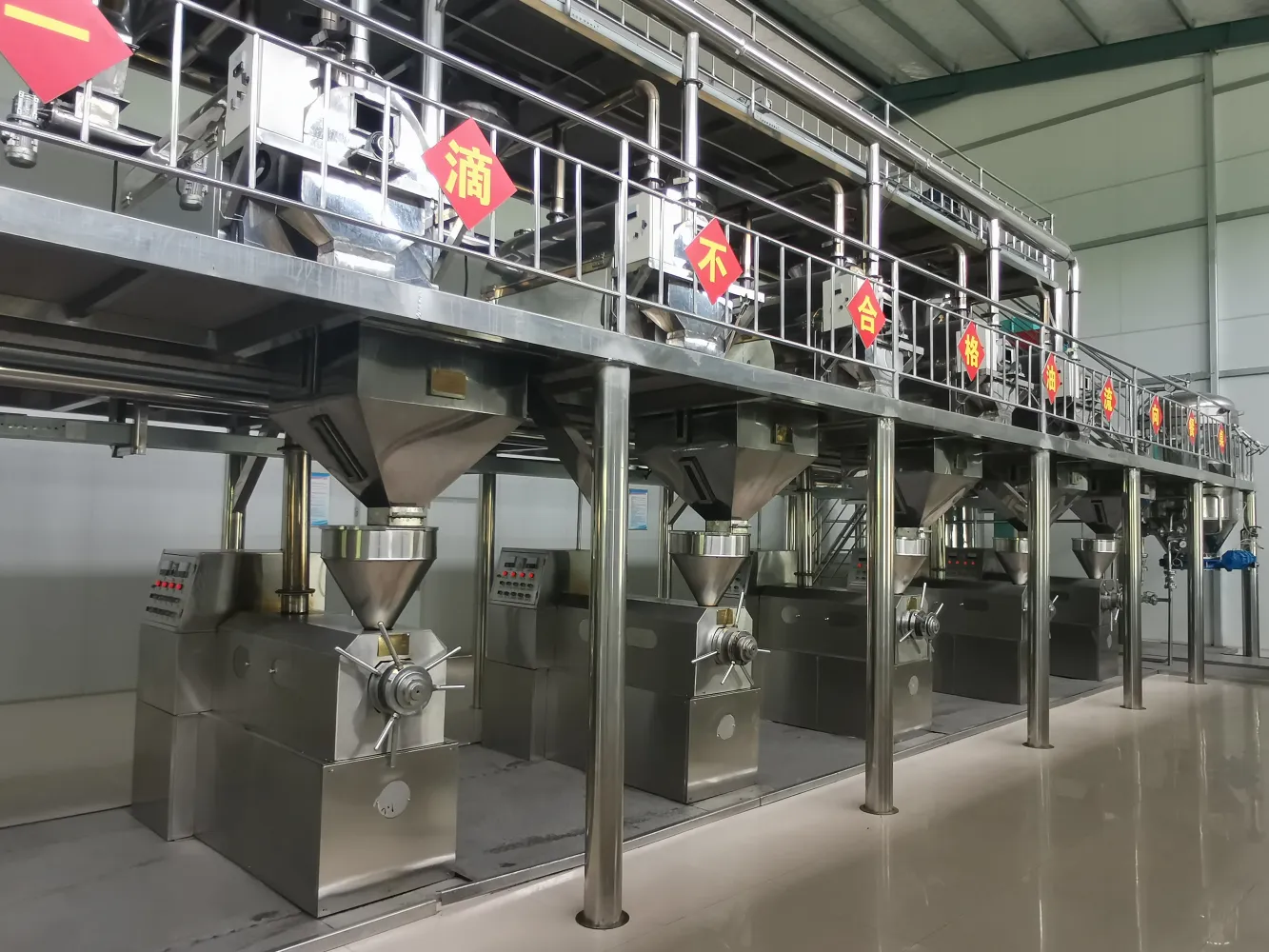
A screw oil press applies continuous pressure to prepared peanut material. Oil drains through openings in the press cage, while the remaining solids leave as peanut press cake. A typical line may include cleaning equipment, crushing or flaking equipment where required, a cooker or conditioner, a screw press, oil collection equipment and filtration.
Consider this route when:
Mechanical pressing generally leaves more residual oil in the press cake than solvent extraction. Actual performance depends on raw material, preparation conditions and press configuration.
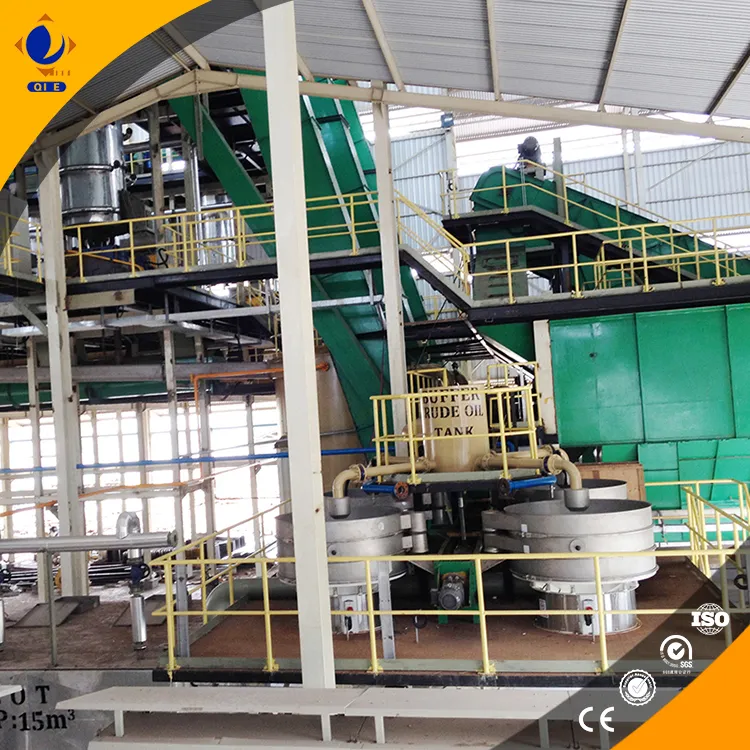
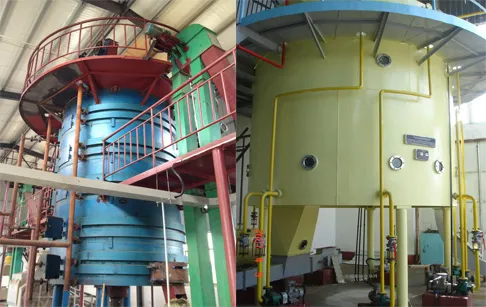
In this process, prepared kernels pass through a screw press first. The resulting press cake then enters a solvent extraction system to recover additional residual oil. The equipment scope may include preparation and conditioning equipment, a pre-press, conveyors, a solvent extractor, solvent evaporation and recovery equipment, meal desolventizing and drying equipment, oil-solvent separation and crude oil filtration.
This route involves more equipment, utilities and process controls. Because solvent extraction uses flammable solvents, the design and operation must include appropriate explosion protection, ventilation, leak monitoring, grounding and bonding, solvent recovery and measures required by applicable local regulations.

| Factor | Mechanical pressing | Pre-pressing + solvent extraction |
|---|---|---|
| Process configuration | Relatively simple | More complex |
| Main extraction equipment | Screw oil press | Pre-press and solvent extraction system |
| Residual oil in press cake | Generally higher | Lower after solvent extraction |
| Investment requirements | Generally lower | Generally higher |
| Operating requirements | Mechanical pressing and filtration | Pressing, solvent handling, recovery and additional process control |
| Primary consideration | A simpler extraction process | Higher overall oil recovery |
Base the decision on production scale, oil recovery targets, investment capacity and the ability to operate the selected process safely. If expansion is planned, consider layout space, press-cake conveying, utility capacity, process equipment, safety systems and local approvals from the outset. A solvent extraction section should not be assumed to be a simple add-on to a mechanical pressing line.
Kernel preparation affects oil press performance and crude oil quality. The required equipment depends on the incoming material and the selected extraction process.
A cleaning section removes foreign material before kernels enter preparation and extraction. A typical arrangement may include a vibrating screen for size-based separation, a destoner for heavy particles and a magnetic separator for ferrous contaminants. Select the system according to the impurity level and throughput of the incoming peanuts.
Crushing or flaking reduces kernel size and prepares the material for conditioning and pressing. Whether it is required depends on the raw material and line design; not all plants need the same preparation arrangement.
A cooker or conditioner adjusts material temperature and moisture before pressing, helping establish suitable conditions for the oil press. Operating parameters should be determined with regard to peanut variety, initial moisture, kernel condition and machine design rather than copied from a generic setting. Raw material testing and equipment trials can help establish appropriate operating conditions.
Crude peanut oil from pressing contains suspended particles and fine solids. A clarification system removes these materials before storage or further processing. Depending on crude oil condition and the required oil quality, the filtration section may include screening, settling and pressure filtration.
A screen or coarse filter removes larger solids and can reduce the load on downstream equipment. A settling tank allows heavier suspended particles to separate under gravity. Tank capacity and retention time should be considered alongside crude oil flow and the required clarification process.
A plate-and-frame filter press uses filter cloths and pressure to separate finer suspended solids. The required filtration area and operating arrangement depend on oil flow rate, solids content and filtration requirements. These components do not have to be installed together in every plant; select the arrangement to suit the crude oil and downstream process.
Crude oil filtration is not the same as edible oil refining. Filtration removes suspended solids, while refining may involve degumming, neutralization, bleaching, deodorization and other treatments to achieve the required finished-oil specification.

Calculate line capacity from the amount of raw material to be processed, not from expected finished oil output alone. Establish daily raw material supply, whether the capacity refers to in-shell peanuts or shelled kernels, effective operating hours per day, operating days per year, the extraction method and the production schedule.
Required hourly throughput = Daily raw material input ÷ Effective operating hours per day
For example, a plant processing 30 tonnes of shelled peanut kernels per day over 20 effective operating hours requires an average throughput of:
30 ÷ 20 = 1.5 tonnes of shelled kernels per hour.
This is an illustrative calculation, not a fixed equipment specification. Final selection should consider operating conditions, material characteristics, equipment availability and maintenance plans. If the 30 tonnes refers to in-shell peanuts, calculate downstream kernel capacity using the expected shelling output; the two capacity bases are not equivalent.
For a pre-pressing and solvent extraction plant, the solvent extraction section must also match the press-cake output from the pre-pressing stage.

The right supply scope depends on existing facilities, project capacity and how much of the process needs to be supplied.
An individual screw press may suit a facility that already has cleaning, preparation and oil filtration equipment. Before purchasing, confirm the required hourly capacity and its material basis, raw material condition, preparation needs, motor and utility requirements, press-cake discharge, oil collection, spare parts and maintenance. Check compatibility with existing upstream and downstream equipment.
Explore multi-function oil press equipment for a reference to Qi'e's oil processing product range.
An integrated line may include cleaning, shelling, kernel preparation, conditioning, pressing, filtration, conveying, storage and associated control systems. A solvent extraction project requires additional extraction, recovery and meal treatment sections. Coordinating equipment capacity, material handling, utilities, plant layout and process control helps prevent bottlenecks between machines.
Confirm whether refining, oil storage, utilities, installation and commissioning are included or excluded. An extraction line does not automatically include a complete edible oil refining plant. Qi'e Grain and Oil Machinery Co., Ltd. supplies oil processing machinery and provides design, installation and technical services according to project requirements.

A clear technical inquiry gives the equipment supplier enough information to evaluate the process and prepare a suitable configuration. Start with these three details:
| Information to provide | Details to confirm |
|---|---|
| Raw material | In-shell peanuts or shelled kernels |
| Material condition | Moisture, impurity level and general quality |
| Processing capacity | Tonnes per day or hour, with the capacity basis specified |
| Extraction method | Mechanical pressing or pre-pressing and solvent extraction |
| Product requirements | Crude peanut oil or refined edible peanut oil |
| Existing facilities | Available cleaning, pressing, filtration, refining and storage equipment |
| Utilities | Electricity, steam, water and other required services |
| Project location | Country and site conditions relevant to design and compliance |
| Supply scope | Individual machines, a processing section or a complete production line |
When reviewing quotations, also compare rated capacity and its basis, motor and installed power, steam and utility requirements, dimensions, product-contact materials, automation scope, spare parts, installation and commissioning support, safety requirements, and all included or excluded items. Clear scope definitions are especially important when comparing a single oil press with a complete peanut oil processing line.
A typical line needs raw material cleaning, kernel preparation, conditioning, an oil press and crude oil filtration. In-shell peanuts may also require a sheller and shell-kernel separator. A solvent extraction process requires additional extraction and solvent recovery equipment.
A screw oil press is commonly used for mechanical peanut oil extraction. The appropriate model depends on required throughput, raw material condition, preparation process and operating schedule. Larger plants seeking additional recovery from press cake may consider pre-pressing followed by solvent extraction.
A press uses mechanical pressure to extract oil from prepared peanut material. A solvent extractor is used to recover residual oil from prepared material, commonly press cake in a pre-pressing process. They perform different functions in an extraction system.
Divide the required daily raw material input by planned effective operating hours to estimate hourly throughput. Specify whether the input is in-shell peanuts or shelled kernels, then match the cleaning, shelling, preparation, conditioning, extraction and filtration equipment to the required flow.
Not necessarily. Extraction equipment generally covers preparation, pressing or extraction and crude oil clarification. Refining is a separate section and may include degumming, neutralization, bleaching and deodorization, depending on the finished-oil specification.
A commercial peanut oil line should be configured around the raw material, processing capacity, extraction method and required product quality. Share your raw material type, target throughput, project location and required supply scope so Qi'e can review the processing requirements and discuss suitable equipment options.
Qi'e Grain and Oil Machinery Co., Ltd. provides oil processing equipment as well as design, installation and technical services for project requirements.
Request an Equipment ConfigurationQi'e Grain and Oil Machinery Co., Ltd. Engineering Team
This guide presents an engineering perspective on peanut oil extraction equipment, process configuration and commercial production requirements.