How to Increase Oil Extraction Rate (Without Sacrificing Quality)
If your oil yield feels “good but not great,” you’re not alone. In many small-to-mid scale operations—whether seeds, nuts, or botanical raw materials—2%–8% of potential oil often stays locked inside the cake due to setup, moisture, temperature, particle size, or press configuration. The good news: most yield gains come from disciplined process control, not expensive guesswork.
1) Start With a Yield Baseline (So You Know What to Fix)
Before changing anything, measure your current performance using simple, repeatable numbers. This avoids the common trap of “feeling” like yield improved while actually losing oil to higher solids in crude output or inconsistent moisture.
Key Metrics to Track (Weekly Minimum)
| Metric | How to Measure | Practical Target Range |
|---|---|---|
| Oil recovery (%) | (Oil out ÷ theoretical oil in) × 100 | 85%–95% (depends on material & method) |
| Residual oil in cake (%) | Lab test or NIR spot checks | 4%–10% typical; aim to reduce steadily |
| Moisture of raw material (%) | Moisture meter + oven validation | 6%–10% (common sweet spot for many seeds) |
| Press temperature (°C) | Probe at barrel zones | 40–80°C cold-press range; 80–120°C hot-press range |
| Throughput stability | kg/hr variation tracking | < ±5% variation per shift |
Tip: If you can only track one number at first, track residual oil in cake. It’s the fastest truth-teller for extraction rate.
2) Control Moisture Like It’s Your “Hidden Lever”
Moisture is often the biggest yield driver—and the most neglected. Too dry and the material becomes brittle, creating channels that let oil stay trapped. Too wet and it turns pasty, reducing pressure build-up and clogging the press.
For many oil-bearing seeds, a practical working range is 6%–10% moisture. In real plants, moving from 4% moisture to ~8% moisture can improve recovery by 1.5%–4%, depending on raw material, press type, and heat profile.
Moisture Best Practices (That Actually Work on the Floor)
- Condition raw material in batches (not continuous “eyeballing”). Use a holding bin to equalize moisture for 4–12 hours.
- Validate handheld moisture meters weekly using an oven method (simple, low-cost, and reliable).
- Watch the cake: powdery cake often signals too dry; glossy sticky cake often signals too wet.
3) Optimize Particle Size: Fine Enough to Release Oil, Coarse Enough to Build Pressure
Grinding is not “the finer the better.” Ultra-fine meal can block drainage paths and increase emulsion-like losses. Overly coarse material reduces cell rupture and leaves oil behind. The goal is a balanced particle distribution that supports both oil liberation and mechanical dewatering.
As a rule of thumb, many seed pressing lines perform well when most particles fall in the 0.3–1.0 mm range, with limited dust. If you see frequent press choking, rising motor load, or darker crude oil, your grind may be too fine or too inconsistent.
Quick Diagnostic: Your Grind Is Off If…
Residual oil stays high even after heating and screw adjustments → likely insufficient cell rupture (too coarse) or poor conditioning.
Oil looks milky / high solids → too fine, too wet, or excessive shear; drainage paths are compromised.
Motor load spikes with unstable throughput → grind inconsistency, foreign matter, or feed rate fluctuation.
4) Use Temperature Intelligently: Warm the Oil, Don’t Burn the Value
Temperature improves flow (lower viscosity) and helps oil separate from solids. But overheating can increase oxidation risk, darken color, and create off-notes—especially for premium edible oils where aroma and natural antioxidants matter.
Many operators see yield lift of 2%–6% by moving from poorly controlled “cold-ish pressing” to a stable controlled profile. Typical working windows:
| Pressing Style | Common Barrel/Material Temp | When It Helps Yield Most |
|---|---|---|
| Cold press (quality-focused) | 40–80°C | Improves flow while protecting aroma |
| Hot press (max yield-focused) | 80–120°C | Boosts separation; reduces residual oil in cake |
Practical tip: Use two-stage control—preheating/conditioning to target temperature, then stable barrel zones. Random temperature swings are the enemy of both yield and consistency.
5) Upgrade Press Settings the Right Way: Pressure, Restriction, and Residence Time
If your press is mechanically sound, most yield improvement comes from tuning the relationship between feed rate, screw configuration, and cake outlet restriction. You want enough residence time and compression to express oil—but not so much that you overheat, shear excessively, or stall the system.
A Simple, Safe Tuning Sequence
- Stabilize feed rate first (aim for < ±5% variation per hour).
- Set moisture to target, then confirm cake texture is consistent.
- Adjust restriction gradually (small steps). After each change, wait 15–30 minutes for steady-state.
- Record motor load, throughput, crude oil clarity, and residual oil in cake.
If you chase yield by cranking restriction too hard, you can win 1% today and lose customers next month due to overheated oil and unstable supply.
6) Stop Losing Oil After the Press: Filtration, Settling, and Handling
Sometimes extraction rate looks low because oil is being lost downstream—in sludge, filter cake, or foam. Even a strong press can “underperform” if crude oil handling is messy.
In many facilities, optimizing settling and filtration alone can recover 0.5%–2.0% of oil that would otherwise be discarded with solids.
Low-Cost Recovery Checklist
- Use settling tanks with sufficient residence time (often 12–24 hours depending on viscosity and solids load).
- Warm crude oil slightly before filtration (within quality limits) to improve flow and reduce trapped oil in filter cake.
- Track “oil in sludge” as a KPI; sample weekly and adjust purge frequency.
- Reduce unnecessary agitation and long open transfers that increase oxidation and emulsification.
7) Raw Material Quality: The Quiet Difference Between 88% and 93%
Two lots that look similar can press very differently. Storage damage, mold risk, free fatty acid increase, and foreign material all reduce effective recoverable oil and push operators into aggressive settings that hurt quality.
If you’re buying from multiple farms or aggregators, set acceptance specs (moisture, impurity, and freshness indicators). In practical terms, reducing impurities by 1% can raise your effective oil yield and reduce wear on the press, screens, and bearings.
Suggested Incoming QC Specs (Adjust by Crop)
| Parameter | Typical Control Point | Why It Matters for Yield |
|---|---|---|
| Impurity | ≤ 1%–2% | Less dilution, less wear, steadier pressure |
| Moisture | Within target window | Directly affects compression and oil flow |
| Storage age | As fresh as possible | Lower oxidation, fewer processing losses |
8) A Practical 14-Day Action Plan to Lift Extraction Rate
If you want results quickly, don’t change ten variables at once. Run controlled improvements that you can repeat next month when a new operator takes the shift.
Day-by-Day Focus
- Days 1–3: Baseline (residual oil in cake, moisture, temperature, throughput). Fix feed stability.
- Days 4–7: Moisture conditioning trials (two target setpoints, same material lot). Record cake behavior and oil clarity.
- Days 8–10: Grind tuning (screen size / mill settings). Aim for consistent particle distribution.
- Days 11–14: Press restriction + temperature stabilization; then optimize settling/filtration losses.
In many operations, this kind of structured tuning can realistically deliver 2%–5% higher oil recovery within two weeks—without changing your raw material supplier.
Questions Buyers and Plant Managers Ask (And the Real Answers)
“Why is my residual oil in cake high even when the press is hot?”
Heat helps, but it can’t compensate for poor moisture conditioning, an unsuitable particle size distribution, or a restriction setting that doesn’t allow enough compression. Also check whether oil is bypassing due to worn screw flights or a damaged barrel/screen.
“Can I push throughput higher and still improve yield?”
Sometimes, but only if your upstream conditioning and grind are consistent. If feed variability is high, increased throughput often reduces residence time and raises residual oil. The best approach is to stabilize first, then increase in small steps while tracking cake oil content.
“What’s a realistic ‘good’ extraction rate?”
For mechanical pressing, many lines land in the 85%–95% recovery range depending on crop, oil content, and quality requirements. If you’re under 85% with stable raw material, there’s usually a controllable process reason.
Want Higher Yield With Stable Quality?
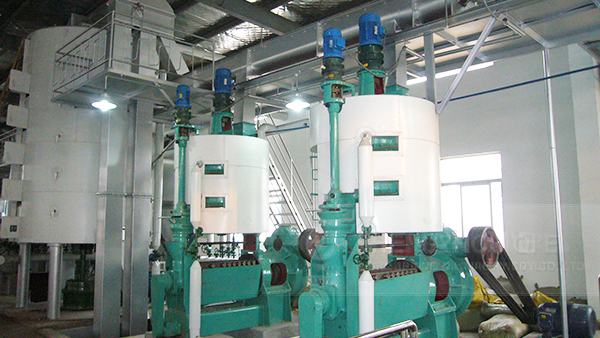
If you’re troubleshooting residual oil in cake, unstable throughput, or inconsistent crude oil clarity, a properly matched oil press machine setup (screw design, barrel configuration, temperature control, and filtration workflow) can make a measurable difference in both extraction rate and day-to-day reliability.
Get a tailored oil press machine recommendation & yield-improvement checklistShare your raw material, capacity (kg/h), and target oil quality—then we’ll map the fastest path to better recovery.
Note: Reference ranges above reflect common industrial operating windows and can vary by crop type, oil content, and product positioning (cold-pressed vs hot-pressed).