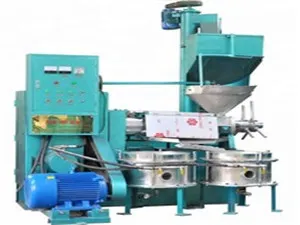
Peanuts are processed into cooking oil through cleaning, shelling, kernel preparation, conditioning, oil extraction, and filtration. If the oil is intended for sale as refined cooking oil, additional refining may be required to meet finished-oil specifications and applicable food regulations.
A commercial peanut oil production line typically includes peanut cleaners, shellers, kernel crushers, cookers or conditioners, screw oil presses, and oil filtration equipment. Plants seeking higher overall oil recovery may add solvent extraction after pre-pressing. The appropriate process depends on raw peanut quality, production capacity, target oil recovery, investment budget, and finished-oil requirements.
Step 1: Clean and Shell the Peanuts
Before oil extraction, remove dust, stones, metal fragments, and other foreign materials. A typical cleaning section uses vibrating screens, aspiration equipment, and magnetic separators.
A peanut shelling machine separates the kernels from the outer shells. A shell-kernel separator then removes loose shell fragments before the kernels enter the preparation section.
Raw material inspection is also essential. Check for mold, moisture damage, abnormal odors, and other signs of deterioration. Peanuts should be assessed for aflatoxin contamination according to the raw-material risk assessment and applicable food safety requirements. Cleaning and ordinary filtration should not be relied on to remove aflatoxins.
Effective cleaning and shelling protect downstream equipment and help maintain consistent processing conditions.
Main equipment: Peanut cleaner, magnetic separator, shelling machine, and shell-kernel separator.

Step 2: Prepare and Condition the Peanut Kernels
After shelling, inspect the kernels and prepare them for oil extraction. Depending on the selected process and equipment, preparation may include crushing, heating, and moisture adjustment.
Kernel Crushing
A crusher or hammer mill breaks peanut kernels into smaller pieces, helping improve the uniformity of subsequent conditioning and pressing.
The particle size should suit the selected equipment. Excessive grinding can produce fine particles that complicate oil clarification and filtration.
Cooking and Conditioning
Conditioning uses controlled heat and, where required, moisture adjustment to prepare peanut kernels for pressing. Appropriate conditions help improve oil release and maintain stable press operation.
For fragrant peanut oil production, roasting or cooking conditions also influence the finished oil's aroma, color, and flavor. Temperature and residence time should be matched to the raw material and equipment design rather than treated as universal settings.
Main equipment: Kernel crusher, cooker or conditioner, continuous roasting machine where required, and temperature-control system.

Step 3: Choose the Peanut Oil Extraction Process
Peanut oil can be extracted through mechanical pressing or through pre-pressing followed by solvent extraction. The choice depends on the required oil recovery, production scale, investment budget, and operating capabilities.
Mechanical Pressing
A screw oil press conveys and compresses conditioned peanut material. Oil passes through openings in the press barrel, while the remaining solid material exits as press cake.
Mechanical pressing is suitable for plants seeking a relatively straightforward extraction process. It is also an option for producers targeting fragrant peanut oil, where roasting and pressing conditions are designed to develop the desired flavor profile.
Oil recovery depends on peanut oil content, kernel preparation, conditioning, press configuration, and operating conditions. If the press cake contains more residual oil than expected, check moisture, conditioning temperature, feed rate, and press condition before changing operating settings.
Pre-Pressing Followed by Solvent Extraction
For plants seeking higher overall oil recovery, solvent extraction can be added after pre-pressing. The pre-press removes part of the oil mechanically, and the prepared cake then enters an extractor where a suitable solvent removes additional oil.
The resulting oil-solvent mixture is processed to recover the solvent. The extracted meal also requires desolventizing and appropriate handling before further use.
This route requires additional equipment, process control, and safety systems. It is worth evaluating when the expected recovery benefits justify the additional investment and operating complexity.

Which Extraction Route Should You Choose?
| Production requirement | Route to evaluate | Main considerations |
|---|---|---|
| A relatively simple extraction process | Mechanical pressing | Equipment cost, press performance, cake residual oil, and operating stability |
| Higher overall oil recovery | Pre-pressing followed by solvent extraction | Additional oil recovery, solvent recovery, safety systems, and operating costs |
| Fragrant peanut oil production | Roasting and mechanical pressing, followed by suitable oil clarification | Aroma development, temperature control, oil clarity, and product specifications |
| Production of refined cooking oil | Either extraction route, followed by appropriate refining | Crude-oil quality, refining requirements, and finished-oil specifications |
The third option is a product-oriented process configuration rather than a separate extraction technology. The required clarification and refining stages depend on the intended product and its quality specifications.
Main equipment: Screw oil press for mechanical pressing; pre-press, extractor, solvent-recovery system, and meal desolventizing equipment for an integrated solvent extraction line.
Step 4: Improve Peanut Oil Extraction Efficiency
Peanut oil extraction efficiency depends on raw-material properties, preparation conditions, equipment performance, and the selected process. Equipment capacity alone does not determine the amount of oil recovered.
The main factors to evaluate are:
- Peanut oil content: Different varieties, growing conditions, and raw-material batches may have different oil contents.
- Raw-material condition: Moisture, maturity, storage conditions, and contamination can affect processing performance.
- Moisture and conditioning: Unsuitable moisture levels or heating conditions can affect oil release and press stability.
- Roasting conditions: For fragrant peanut oil, excessive or insufficient heating can affect the desired aroma, color, and processing consistency.
- Press operation: Uneven feeding, unsuitable operating settings, and worn components can reduce extraction performance.
- Extraction route: Mechanical pressing and pre-pressing followed by solvent extraction produce different residual-oil levels under comparable conditions.
- Equipment matching: Cleaning, preparation, extraction, and filtration sections must handle the intended throughput without creating bottlenecks.
If extraction performance falls below expectations, compare incoming peanut quality, process settings, press cake residual oil, and crude-oil output. Adjustments should be based on measured results rather than increasing temperature or pressure without identifying the cause.
For commercial projects, evaluate oil recovery using the actual oil content of the raw material, the quantity and quality of recovered oil, and the residual oil in the press cake or extracted meal. Avoid assuming a guaranteed recovery figure without defined feedstock conditions and an agreed measurement method.

Step 5: Filter and Refine the Peanut Oil
Crude peanut oil from mechanical pressing contains suspended solids that should be removed before storage or further processing.
A typical oil clarification section may use coarse screening, settling tanks, separators, or filter presses. The configuration depends on the solids content of the crude oil, processing capacity, and required oil clarity.
Filtration removes suspended particles but does not necessarily remove dissolved impurities, reduce free fatty acids, or produce finished refined cooking oil.
Which Refining Steps Are Required?
The refining process depends on crude-oil quality and the specifications of the intended product. Common refining operations include:
| Refining stage | Main purpose |
|---|---|
| Degumming | Removes phospholipids and related impurities |
| Neutralization or another suitable deacidification process | Reduces free fatty acids |
| Bleaching | Reduces pigments and selected impurities |
| Deodorization | Removes volatile compounds responsible for unwanted odors and flavors |
Not every plant requires the same refining configuration. The need for degumming and the choice of deacidification method depend on crude-oil characteristics and the selected refining process.
For fragrant peanut oil, the process must also account for the desired flavor profile. A cold filtration system can remove suspended particles, but it should not be described as equivalent to a complete refining system. The appropriate treatment depends on the product specification and applicable food requirements.
Main equipment: Screens, settling tanks or separators, filter presses, and the refining units required for the selected process.

Step 6: Store and Package the Finished Peanut Oil
After filtration and any required refining, transfer the oil into clean, dry storage tanks. Control moisture and minimize unnecessary exposure to air, heat, and light to help preserve oil quality.
Where packaging is required, select filling equipment according to container type, filling accuracy, and production rate. The storage and packaging system should also minimize contamination during transfer and handling.
Before dispatch, verify that the finished oil meets the applicable quality specifications and food safety requirements for its intended market.
Main equipment: Finished-oil storage tanks, transfer pumps, and filling and packaging equipment where required.
Case Study: A 50 TPD Peanut Oil Pressing Line for a Peanut-Producing Market in Nigeria
Nigeria is a relevant market to consider when planning peanut oil processing because groundnuts are an established agricultural commodity in the country. The following is an illustrative project application based on a documented 50 TPD fragrant peanut oil pressing and cold-filtration system. It is not a claim that the documented installation was located in Nigeria.
Project Requirements
For a commercial producer sourcing peanuts locally, a 50-tonne-per-day processing line can be evaluated when the available raw-material supply, target output, and market demand support this operating scale.
A project configuration suitable for producing fragrant peanut oil can combine raw-material cleaning, continuous roasting, screw pressing, and cold filtration. This approach focuses on maintaining consistent processing conditions while preserving the intended aroma and appearance of the oil.
Main Equipment Configuration
| Processing section | Equipment | Function |
|---|---|---|
| Raw-material cleaning | Vibrating screen, destoner, magnetic separator | Removes foreign materials before processing |
| Roasting | Automatic temperature-controlled continuous roasting machine | Controls heating conditions for aroma and color development |
| Oil extraction | Screw oil press | Extracts oil mechanically from prepared peanuts |
| Oil clarification | Cold-filtration system | Removes suspended impurities to improve oil clarity |
The reference project specification includes 50 TPD peanut cleaning and pretreatment capacity, a continuous roasting system, a screw pressing system, and 20 TPD cold-filtration capacity. These are separate rated processing capacities; the 20 TPD filtration figure should not be interpreted as the oil output of a 50 TPD peanut line.

Why This Configuration Is Worth Evaluating
For a producer targeting fragrant peanut oil, continuous roasting provides more consistent temperature control than relying entirely on manual batch roasting. Screw pressing provides a direct mechanical extraction route, while cold filtration addresses suspended impurities after pressing.
Before adopting this configuration in Nigeria or another peanut-producing market, the buyer should confirm:
- Whether local peanut supply can support 50 tonnes of raw material per day throughout the planned operating season.
- Whether the target product is fragrant pressed peanut oil or refined cooking oil.
- Whether the filtration capacity matches the actual crude-oil flow and daily operating schedule.
- Whether additional refining, storage, packaging, and food safety systems are needed for the intended market.
- Whether the equipment supplier's capacity figures refer to raw-material throughput, oil throughput, or finished-product output.
This type of assessment helps prevent a common project-planning error: selecting an oil press based on nominal capacity without checking whether the upstream and downstream equipment can support the same production plan.
The 50 TPD pressing and 20 TPD cold-filtration configuration is therefore a useful reference for equipment planning, but the final design should be based on the buyer's actual raw materials, product specifications, and operating requirements.
Equipment Required for a Commercial Peanut Oil Production Line
The equipment configuration depends on the extraction route, required throughput, raw-material condition, and finished-oil specifications.
| Processing section | Main equipment | Key selection criteria |
|---|---|---|
| Cleaning and shelling | Cleaner, magnetic separator, sheller, shell-kernel separator | Raw-material condition and processing capacity |
| Kernel preparation | Crusher, cooker or conditioner, roasting machine where required | Kernel characteristics and product requirements |
| Oil extraction | Screw oil press; pre-press and solvent extraction equipment where required | Throughput, residual-oil target, investment, and operating requirements |
| Crude-oil clarification | Settling tank, separator, filter press or suitable filtration system | Solids content and required oil clarity |
| Oil refining | Degumming, deacidification, bleaching, and deodorization units as required | Crude-oil quality and finished-oil specifications |
| Storage and packaging | Storage tanks, transfer pumps, filling equipment | Storage capacity, container type, and output rate |
When selecting a commercial peanut oil production line, evaluate the capacity of each processing section rather than considering the oil press in isolation. Cleaning, conditioning, extraction, filtration, and refining should be matched to the intended production rate.
The equipment supplier should also clarify the design basis, including raw-material specifications, expected operating conditions, product requirements, utility consumption, and the scope of equipment supplied.
Common Problems in Peanut Oil Processing
| Problem | Possible cause | What to check |
|---|---|---|
| High residual oil in press cake | Unsuitable conditioning or press operation | Peanut moisture, conditioning temperature, feed rate, and press condition |
| Excessive solids in crude oil | Poor separation or inadequate filtration | Press operation, settling performance, and filter capacity |
| Dark oil | Raw-material deterioration or unsuitable heating conditions | Peanut quality, storage conditions, and roasting temperature |
| Inconsistent production rate | Uneven feeding or mismatched equipment capacity | Feed system, conditioner output, and throughput of each processing section |
| Inconsistent aroma in fragrant peanut oil | Variation in raw material or roasting conditions | Peanut quality, roasting temperature, residence time, and feed consistency |
Troubleshooting should begin with actual operating data. Changing several process parameters at once makes it difficult to identify the cause of a problem and may affect oil quality without improving recovery.
Conclusion
The peanut oil production process consists of cleaning and shelling, kernel preparation, conditioning or roasting, oil extraction, and filtration, followed by refining when required.
For commercial production, the main decisions are whether mechanical pressing alone is sufficient or solvent extraction is justified, what refining process the crude oil requires, and how to match equipment capacity across the production line.
A 50 TPD fragrant peanut oil pressing line with a separate 20 TPD cold-filtration system illustrates how cleaning, continuous roasting, screw pressing, and oil clarification can be combined into a commercial configuration. For a peanut-producing market such as Nigeria, the final equipment design should be validated against local raw-material supply, actual oil output, finished-product requirements, and operating conditions.
Frequently Asked Questions
1. What equipment is needed for a commercial peanut oil production line?
A typical line includes a peanut cleaner, sheller, kernel crusher, cooker or conditioner, screw oil press, and oil filtration equipment. Solvent extraction equipment, refining units, storage tanks, and packaging machinery are added according to the required process and finished product.
2. Is mechanical pressing or solvent extraction better for peanut oil production?
Mechanical pressing is suitable when a relatively simple extraction process is preferred. Pre-pressing followed by solvent extraction is worth evaluating when higher overall oil recovery justifies the additional equipment, investment, and operating complexity.
3. What factors affect peanut oil extraction efficiency?
The main factors are peanut oil content, raw-material condition, moisture, conditioning temperature, roasting conditions, feeding consistency, press condition, and the selected extraction route. Actual performance should be evaluated using oil output and residual-oil measurements.
4. Does peanut oil need refining before it can be sold as cooking oil?
The answer depends on the intended product, crude-oil quality, applicable regulations, and finished-oil specifications. Mechanical pressing and filtration alone do not establish that the oil meets all requirements for commercial cooking oil.
Contact Us
Ready to start your peanut oil processing project? Get in touch with our engineering team for customized solutions and equipment pricing.