How to Choose Between a Small and Large Peanut Oil Mill?

06 11,2026
Qi'e Grain and Oil Machinery Co., Ltd.
Knowledge Center
Learn how to choose between a small and large peanut oil mill. Compare processing capacity, equipment configuration, extraction methods, investment costs, and production requirements.

Choosing between a small and large peanut oil mill depends on available peanut supply, required processing capacity, market demand, extraction method, and investment budget. A small peanut oil mill is generally suitable for projects processing 5–20 tons of peanuts per day, while medium-sized plants may process 20–100 tons per day. Large peanut oil mills typically process 100 tons or more per day and require stable raw material supply and established product markets.

The main difference lies in production capacity, equipment configuration, processing technology, and operating requirements. Small plants usually use compact mechanical pressing systems, while medium and large plants may require integrated pretreatment, multiple pressing units, solvent extraction, refining, and automated material handling.

The right peanut oil mill capacity should be based on actual raw material availability and expected sales demand, not maximum equipment output alone.

1. Small vs. Medium vs. Large Peanut Oil Mill: Key Differences

Peanut oil mills can be classified into small, medium, and large production scales according to their daily raw material processing capacity.

Selection Factor Small Peanut Oil Mill Medium Peanut Oil Mill Large Peanut Oil Mill
Processing capacity 5–20 TPD 20–100 TPD 100 TPD and above
Raw material supply Limited or locally sourced Regular regional supply Stable bulk supply
Processing method Mainly mechanical pressing Mechanical pressing or pre-pressing with solvent extraction Mechanical pressing or integrated solvent extraction
Equipment configuration Compact cleaning, conditioning, pressing, and filtration Integrated pretreatment and multiple pressing units Integrated pretreatment, extraction, and optional refining
Automation Manual or semi-automatic Partial automation Greater automation potential
Labor arrangement More manual handling Combined manual and automated operation Centralized process control
Initial investment Generally lower Moderate Generally higher
Operating model Flexible production Regular commercial production Continuous industrial production
Suitable market Local and regional markets Growing regional markets Large regional and industrial markets

These capacity ranges are indicative project categories rather than universal industry standards. Actual plant classification depends on equipment design and processing requirements.

It is also important to distinguish between raw material processing capacity and finished oil output. A 20 TPD peanut oil mill processes approximately 20 tons of peanuts per day, not 20 tons of finished peanut oil.

Actual oil production depends on peanut oil content, moisture, pretreatment conditions, extraction method, and residual oil in the meal.

2. How to Choose the Right Peanut Oil Mill Capacity

The first step in selecting a peanut oil mill is calculating how much raw material can be supplied consistently throughout the year.

Step 1: Calculate Annual Peanut Supply

Estimate the quantity of peanuts that can be purchased and delivered throughout the year.

Consider:

  • Annual peanut procurement volume
  • Seasonal supply fluctuations
  • Peanut moisture and impurity levels
  • Shelled or unshelled peanut availability
  • Storage capacity and procurement arrangements

A large peanut oil mill requires a reliable supply chain. If peanuts are only available during a short harvesting period, the plant may operate below its designed capacity during other months.

Step 2: Calculate Required Daily Processing Capacity

Use the following formula:

Daily Peanut Processing Requirement = Annual Peanut Supply ÷ Planned Operating Days

For example, assume a project can secure 6,000 tons of peanuts annually and plans to operate 300 days per year.

6,000 ÷ 300 = 20 TPD

The project therefore requires an average daily processing capacity of 20 tons.

This is the average processing requirement, not necessarily the final equipment nameplate capacity. Maintenance, downtime, seasonal supply, and daily operating hours must also be considered when selecting nominal equipment capacity.

Step 3: Match Processing Capacity with Sales Demand

Raw material availability alone cannot determine plant size.

The expected sales volume of peanut oil and peanut meal should also be evaluated.

For example:

  • A plant with sufficient peanut supply but limited oil sales may accumulate finished product inventory.
  • A plant with strong oil demand but insufficient peanut supply may experience low equipment utilization.

The selected capacity should balance annual peanut supply, expected oil production, meal sales, and planned operating days.

3. How Does Equipment Configuration Differ Between Small and Large Peanut Oil Mills?

Equipment configuration should match the selected processing capacity, raw material condition, and required oil extraction method.

Small Peanut Oil Mill Equipment

A small peanut oil mill generally uses a compact mechanical pressing line.

Typical equipment includes:

  • Peanut Cleaning Machine
  • Destoner
  • Peanut Shelling Machine, if unshelled peanuts are processed
  • Peanut Crushing or Conditioning Equipment
  • Peanut Roaster or Cooker
  • Screw Oil Press
  • Oil Filter Press
  • Crude Oil Storage Tank

The pressing section is usually the core production unit. For aromatic peanut oil, roasting and conditioning conditions must be matched with the screw press to maintain stable pressing and the required oil characteristics.

If the finished product requires refined peanut oil, additional refining equipment may be necessary.

Small peanut oil mill equipment with screw oil press and oil filter machines
Small peanut oil mill equipment configuration for mechanical peanut oil pressing

Medium Peanut Oil Mill Equipment

A medium-sized peanut oil mill requires a more coordinated production configuration.

Typical equipment may include:

  • Peanut Cleaning and Separation System
  • Peanut Shelling and Crushing Equipment
  • Cooking and Conditioning System
  • Multiple Screw Oil Presses or Pre-Pressing Equipment
  • Oil Filtration System
  • Crude Oil Storage Tanks
  • Peanut Meal Conveying System
  • Supporting Electrical and Utility Systems

Depending on the required oil recovery rate and production specifications, solvent extraction may also be evaluated.

Large Peanut Oil Mill Equipment

A large peanut oil mill may require an integrated industrial processing configuration.

Typical equipment includes:

  • Peanut Cleaning and Separation System
  • Peanut Crushing Equipment
  • Cooking and Conditioning System
  • Screw Pre-Press Machine
  • Solvent Extraction System, when required
  • DTDC Desolventizer
  • Solvent Evaporation and Recovery Equipment
  • Crude Oil Filtration System
  • Peanut Oil Refining Equipment
  • Automated Conveying System
  • Centralized Process Control System

For medium and large plants, the capacities of pretreatment, pressing, filtration, storage, and conveying systems must be properly matched. Insufficient capacity in any section can interrupt production even when the main presses have adequate throughput.

4. Should You Choose Mechanical Pressing or Pre-Pressing with Solvent Extraction?

The extraction method should be selected according to oil recovery targets, product requirements, investment, and operating conditions.

Selection Factor Mechanical Pressing Pre-Pressing + Solvent Extraction
Process configuration Simpler More complex
Main equipment Screw oil presses and filters Pre-press, extractor, DTDC, evaporation, and recovery systems
Initial investment Generally lower Generally higher
Oil recovery objective Depends on pressing conditions Higher overall oil recovery potential
Operating requirements Relatively straightforward Requires solvent management and specialized operation
Safety requirements Conventional machinery safety Additional solvent fire and explosion protection
Typical application Small and medium pressing-focused plants Larger projects requiring higher overall oil recovery

Mechanical pressing is often suitable for projects producing aromatic peanut oil or serving markets where a simpler extraction route is preferred.

Pre-pressing followed by solvent extraction is worth evaluating when higher overall oil recovery is required and the additional investment can be justified.

Solvent extraction is not automatically necessary for every large peanut oil mill. The decision should consider residual oil in press cake, expected additional oil recovery, solvent consumption, energy requirements, equipment investment, and operating costs.

Projects using solvent extraction must include appropriate enclosed equipment, solvent recovery, ventilation, monitoring, and fire and explosion protection.

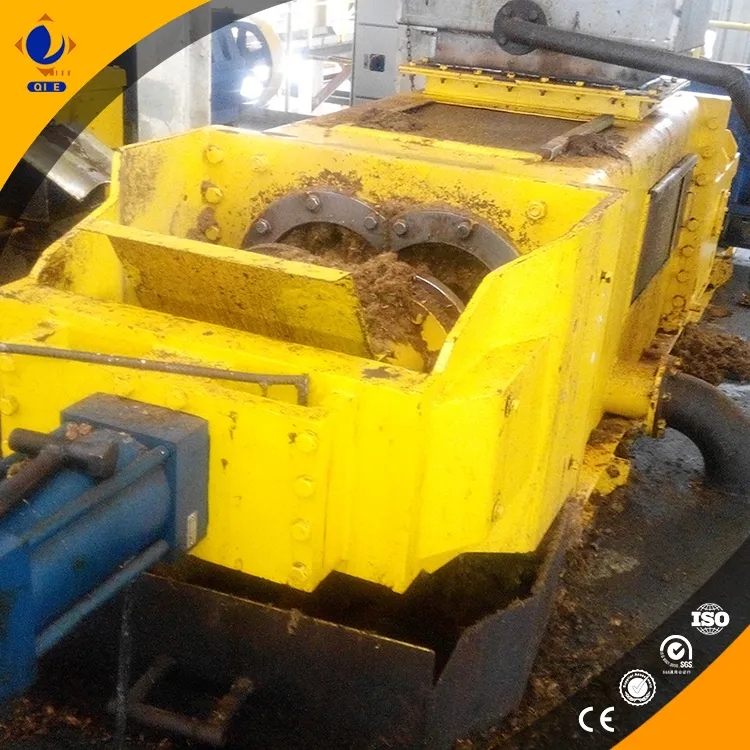
Industrial peanut oil screw pressing machines for continuous peanut processing
Peanut oil screw pressing equipment used in medium and large peanut oil mills

5. How to Compare Peanut Oil Mill Investment and Operating Costs

A small peanut oil mill generally requires less initial investment because it uses fewer machines and simpler supporting systems. Medium and large plants require additional investment in processing equipment, utilities, material handling, storage, and potentially solvent extraction and refining systems.

The main investment components include:

  • Processing equipment
  • Factory construction and installation
  • Electrical and steam systems
  • Raw material and finished product storage
  • Conveying and material handling
  • Automation and control systems
  • Environmental and safety facilities

To compare the operating economics of different plant sizes, use the following formula:

Operating Cost per Ton = Annual Operating Cost ÷ Annual Peanut Throughput

The main operating expenses include:

  • Labor
  • Electricity
  • Steam and thermal energy
  • Equipment maintenance
  • Filter materials and consumables
  • Solvent losses, if applicable
  • Waste treatment and environmental management
Cost Factor Small Plant Medium Plant Large Plant
Equipment investment Lower Moderate Higher
Labor requirements More manual handling Combined manual and automated operation Greater automation potential
Energy requirements Depends on pressing configuration Coordinated utility planning Higher total utility demand
Maintenance Relatively simple More equipment coordination More complex integrated systems
Production utilization Depends on local supply Requires regular procurement Requires stable bulk supply
Cost per ton May be higher at limited throughput Depends on utilization May decrease at high utilization

A larger plant may achieve lower processing costs per ton when equipment utilization is high and production remains stable. However, insufficient raw material supply or weak product demand can make the additional investment uneconomical.

The investment decision should therefore consider annual throughput, equipment utilization, and expected product sales rather than nominal capacity alone.

6. When Should You Choose a Small, Medium, or Large Peanut Oil Mill?

The appropriate plant scale depends on the relationship between raw material supply, market demand, extraction requirements, and investment capacity.

Choose a Small Peanut Oil Mill When:

  • Annual peanut supply is limited or mainly local.
  • The target market has moderate or uncertain demand.
  • Mechanical pressing is the preferred extraction method.
  • Initial investment needs to remain controlled.
  • A relatively simple operating and maintenance system is preferred.

Choose a Medium Peanut Oil Mill When:

  • Regional peanut supply can support regular commercial production.
  • Oil and peanut meal sales channels are developing.
  • Higher processing capacity is needed than a small pressing line can provide.
  • Multiple pressing units or integrated pretreatment are economically justified.
  • Future production expansion is being considered.

Choose a Large Peanut Oil Mill When:

  • Stable bulk peanut supply is available.
  • The company has established oil and meal sales channels.
  • Continuous industrial production is economically justified.
  • Higher overall oil recovery is an important objective.
  • Integrated processing and automation are required.
  • The project can support additional infrastructure and operating investment.

If future expansion is expected, the initial plant layout should reserve sufficient space for additional presses, pretreatment equipment, storage tanks, and utility systems. This helps reduce major modifications when production capacity increases.

Large peanut oil mill solvent extraction equipment with industrial desolventizer system
Solvent extraction equipment configuration for large-scale peanut oil processing plants

Engineering Insight

The rated capacity of a screw press should not be treated as the total plant capacity. Pretreatment, pressing, filtration, and storage systems must be properly matched to maintain stable production.

Author: QIE GROUP Process Engineer

Frequently Asked Questions

1. What is the difference between a small and large peanut oil mill?

A small peanut oil mill generally processes 5–20 tons of peanuts per day and uses compact mechanical pressing equipment. A large peanut oil mill typically processes 100 tons or more per day and may use integrated pretreatment, pre-pressing, solvent extraction, refining, and automated material handling systems.

2. What capacity is suitable for a small peanut oil mill?

A processing capacity of 5–20 tons of peanuts per day can serve as a reference range for small commercial projects. The actual capacity should depend on available peanut supply, operating days, and market demand.

3. What is the difference between peanut processing capacity and peanut oil output?

Peanut processing capacity refers to the quantity of raw peanuts processed per day, usually measured in tons per day (TPD). Peanut oil output refers to the quantity of finished oil produced. Actual oil output depends on raw material oil content, moisture, pretreatment conditions, extraction method, and residual oil in the meal.

4. Does a large peanut oil mill require solvent extraction?

No. A large peanut oil mill can use mechanical pressing if the product and oil recovery requirements allow it. Solvent extraction should be considered when higher overall oil recovery justifies the additional investment and operating requirements.

5. Is a large peanut oil mill more economical than a small one?

Not necessarily. A large plant may achieve lower operating costs per ton at a high utilization rate. However, a small plant may be more economical when raw material supply and sales demand are limited.

Need Expert Advice on Your Peanut Oil Mill Project?

Contact our engineering team today to design a customized processing solution tailored to your capacity, budget, and local market requirements.

Contact Us
Name *
Email *
Message *

Recommended Products

Small Palm Oil Processing Equipment
Soybean Oil Process Machine
Fully Automatic 20 Tons Industrial Palm Oil Processing Machine
High Yield Red Palm Oil Processing Equipment
Twin Screw 10 Tons/hour Palm Oil Pressing Production Line
Popular articles
Recommended Reading

Related Reading

Contact us
Contact us
img
https://shmuker.oss-accelerate.aliyuncs.com/tmp/temporary/60ec5bd7f8d5a86c84ef79f2/60ec5bdcf8d5a86c84ef7a9a/thumb-prev.png