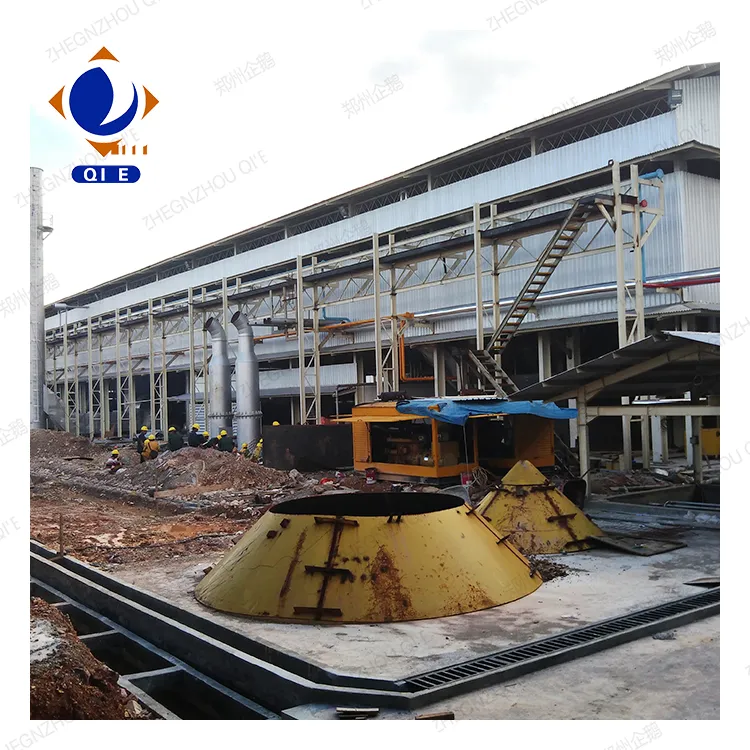
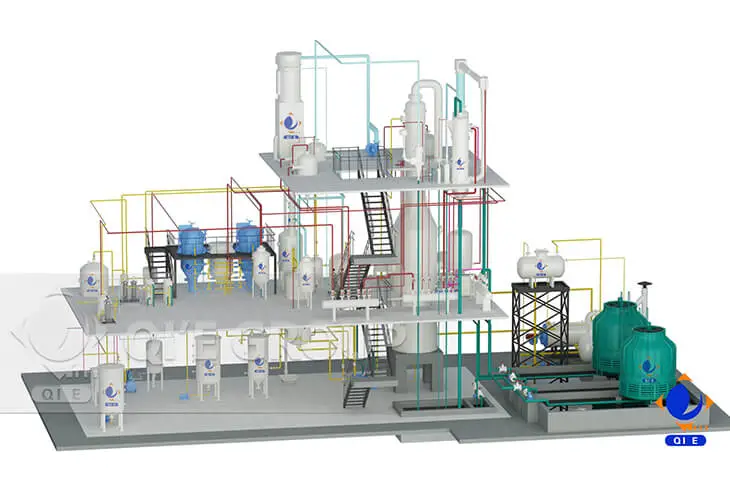
A typical commercial peanut oil production line may use mechanical pressing for a relatively simple process, while larger plants can combine pre-pressing with solvent extraction when higher overall oil recovery is required. For specialty peanut oil, such as aromatic or traditionally roasted peanut oil, roasting and physical filtration may be integrated into the process.
The equipment should therefore be selected as a complete processing system rather than as an individual peanut oil press.
Commercial Peanut Oil Production Process Flow
A typical commercial peanut oil production process can be arranged as:
Not every plant uses every stage. A pressing-only plant does not require solvent extraction, while a specialty aromatic peanut oil line may use controlled roasting and physical filtration instead of a conventional full refining process.
The process route should be determined before selecting the peanut oil production equipment.
Step-by-Step Commercial Peanut Oil Production Process
1. Peanut Cleaning
Incoming peanuts first pass through a cleaning system to remove stones, soil, stems, metal particles, and other foreign materials.
Typical equipment includes:
- Vibrating or rotary cleaner
- Destoner
- Magnetic separator
- Air separator
- Conveying equipment
Effective cleaning protects downstream equipment and provides a stable raw-material condition for shelling, roasting, conditioning, and pressing.
For a commercial plant, the cleaning system should be sized according to the required peanut throughput rather than the capacity of the oil press alone.

2. Peanut Shelling and Kernel Separation
When unshelled peanuts are used, the shells should be removed before oil extraction.
A commercial shelling section may include:
- Peanut sheller
- Aspirator
- Kernel-hull separator
- Elevator or conveyor
The objective is to obtain clean kernels while limiting excessive kernel breakage and fines. Shelling performance directly affects the material entering the preparation and pressing sections.
3. Crushing or Flaking
Clean peanut kernels may be cracked, crushed, or flaked before conditioning and extraction.
Typical equipment includes:
- Crusher
- Cracker
- Flaking mill
- Roller mill
Size reduction increases the exposed surface area of the kernels and improves heat and moisture transfer during subsequent processing.
The exact preparation method depends on the selected extraction route. Solvent extraction systems generally require carefully prepared material to achieve stable extraction performance.
4. Conditioning or Roasting
Conditioning adjusts the temperature and moisture of peanut kernels before mechanical extraction.
Typical equipment includes:
- Cooker
- Conditioner
- Steam-heated conditioning system
For conventional pressing, controlled conditioning helps establish suitable material characteristics for the screw press.
For aromatic peanut oil, a continuous roasting system may be used instead. Roasting develops the characteristic aroma and affects the color and flavor of the finished oil.
The roasting or conditioning temperature should not simply be copied from another peanut variety. It should be established according to the raw material, desired product characteristics, and press configuration.

5. Mechanical Pressing or Pre-Pressing
After preparation, the peanuts enter a screw oil press.
There are two main commercial extraction routes.
Mechanical Pressing
In a full mechanical pressing process, the screw press extracts oil directly from the prepared peanut kernels without solvent extraction.
The main equipment includes:
- Screw oil press
- Oil collection system
- Crude-oil screen
- Filter
- Press-cake conveyor
Mechanical pressing is suitable when the project requires a relatively simple process and the remaining oil in press cake is acceptable for the intended economics.
Pre-Pressing Followed by Solvent Extraction
For larger plants requiring higher overall oil recovery, the screw press can be used as a pre-press.
The press removes a substantial proportion of the oil, while the remaining oil in the press cake is recovered through solvent extraction.
This route requires additional equipment, including:
- Pre-press
- Extractor
- Desolventizer-toaster
- Solvent recovery system
- Solvent storage and safety systems
The choice between full pressing and pre-pressing plus solvent extraction should be based on capacity, oil recovery requirements, investment scope, process complexity, and operating conditions.
What Equipment Is Needed for Commercial Peanut Oil Production?
The main equipment can be organized according to the processing stage:
The equipment configuration should be matched to the selected process route. A plant designed for aromatic peanut oil, for example, may require a roasting and physical filtration section rather than a conventional solvent extraction and refining configuration.
How to Choose the Peanut Oil Production Process
The main commercial decision is whether the plant should use mechanical pressing, pre-pressing plus solvent extraction, or a specialized pressing process for a particular product.
The correct route depends on the project's raw material, target capacity, required oil recovery, final product specification, and investment scope.
A larger plant does not automatically require solvent extraction. Similarly, a smaller plant may still require specialized roasting or filtration when the finished product is positioned around a specific flavor profile.
Example: 50 TPD Peanut Oil Pressing Plant in a Peanut-Producing Market
A practical example is a 50 TPD aromatic peanut oil pressing project designed for a peanut-producing market. The project was configured around a relatively compact commercial production line rather than a large solvent extraction plant.
The process included:
The raw-material preparation section used vibrating screening, destoning, and magnetic separation to provide clean peanuts for subsequent processing. The project then used a continuous roasting system with automatic temperature control to maintain stable roasting conditions.
The core extraction section used a screw oil press suitable for the roasted peanut material. The resulting crude peanut oil was then sent to a 20 TPD physical cold-filtration system to remove suspended impurities while maintaining the desired aromatic characteristics.
The final configuration was:
- Peanut processing capacity: 50 TPD
- Extraction method: Mechanical screw pressing
- Roasting: Continuous controlled roasting
- Oil treatment: 20 TPD cold filtration
- Product focus: Aromatic peanut oil
The project demonstrates why equipment selection should follow the product specification and process route, rather than simply selecting a high-capacity oil press. For a commercial plant focused on aromatic peanut oil, roasting stability and downstream filtration can be as important as the pressing equipment itself.

Key Factors Affecting Commercial Peanut Oil Production
Peanut Raw Material
Peanut varieties differ in oil content, kernel condition, moisture, and physical characteristics.
These differences affect:
- Expected oil yield
- Pressing performance
- Energy consumption
- Press-cake residual oil
- Crude-oil quality
Therefore, raw-material analysis should be completed before final equipment selection.
Moisture and Temperature
Moisture and temperature strongly affect peanut pressing behavior.
Insufficient conditioning can make oil release more difficult, while excessive heating may affect oil quality or the desired flavor profile.
For aromatic peanut oil, roasting conditions are particularly important because temperature and residence time influence aroma development and color.
Particle Size and Feed Preparation
Crushing or flaking should provide a suitable material structure for the selected extraction method.
Poor preparation can lead to unstable feeding, excessive fines, uneven heating, or reduced extraction performance.
Press Load and Feed Rate
Screw speed, feed rate, pressure, and material condition affect the balance between throughput and oil recovery.
The press should therefore be operated together with the upstream preparation system. Increasing press load alone does not necessarily improve overall plant performance if the feed material is not properly prepared.
Crude Oil Filtration
Crude peanut oil from mechanical pressing normally contains suspended solids.
Screening and filtration should be sized according to actual crude-oil flow and solids loading.
For specialty peanut oil, physical filtration can also be selected as a product-quality step when the objective is to maintain the desired natural aroma and appearance.
What Happens After Peanut Oil Extraction?
The treatment required after pressing depends on the final product.
For conventional refined peanut oil, crude oil may undergo:
The exact configuration depends on crude-oil quality and the required final specification.
For specialty aromatic peanut oil, the process may instead include physical filtration or cold filtration when the product specification is based on maintaining a characteristic aroma and appearance.
Therefore, the downstream section should be designed according to the quality of the crude peanut oil and the final product specification, rather than automatically applying the same refining system to every peanut oil plant.
Common Problems in Commercial Peanut Oil Production
These problems should be diagnosed by processing section rather than by changing the screw press alone.
How to Select Commercial Peanut Oil Production Equipment
A practical equipment-selection process is:
- Define the required peanut processing capacity.
- Analyze the peanut variety, moisture, oil content, and physical condition.
- Define the finished peanut oil specification.
- Choose mechanical pressing, pre-pressing plus solvent extraction, or a specialty pressing route.
- Size cleaning, preparation, pressing, filtration, and downstream equipment as one balanced system.
- Establish operating parameters through raw-material and equipment testing.
For a commercial peanut oil plant, the key is not simply choosing the largest oil press. The complete line must maintain balanced throughput from raw-material cleaning through oil extraction and final treatment.
FAQ
1. What is the basic commercial peanut oil production process?
The basic process includes cleaning, shelling, kernel preparation, conditioning or roasting, mechanical pressing, crude-oil filtration, and additional refining or physical filtration according to the final product requirement.
2. What equipment is needed for peanut oil production?
Typical equipment includes cleaners, destoners, shellers, separators, crushers or flakers, conditioners or roasters, screw presses, filters, oil tanks, and downstream refining or filtration equipment.
3. Is mechanical pressing enough for commercial peanut oil production?
Mechanical pressing can be used as a complete extraction route when the required oil recovery and product specification can be achieved through pressing. Larger plants may evaluate pre-pressing followed by solvent extraction when higher overall oil recovery is required.
4. What determines the capacity of a peanut oil production line?
Capacity depends on raw-material supply, target throughput, equipment configuration, operating conditions, and the selected extraction route. Cleaning, preparation, pressing, filtration, and downstream sections should be balanced to avoid bottlenecks.
5. Does commercial peanut oil always need full refining?
No. The required downstream treatment depends on the final product. Conventional refined peanut oil may require a complete refining process, while some specialty aromatic peanut oils may use physical filtration or cold filtration according to the product specification.